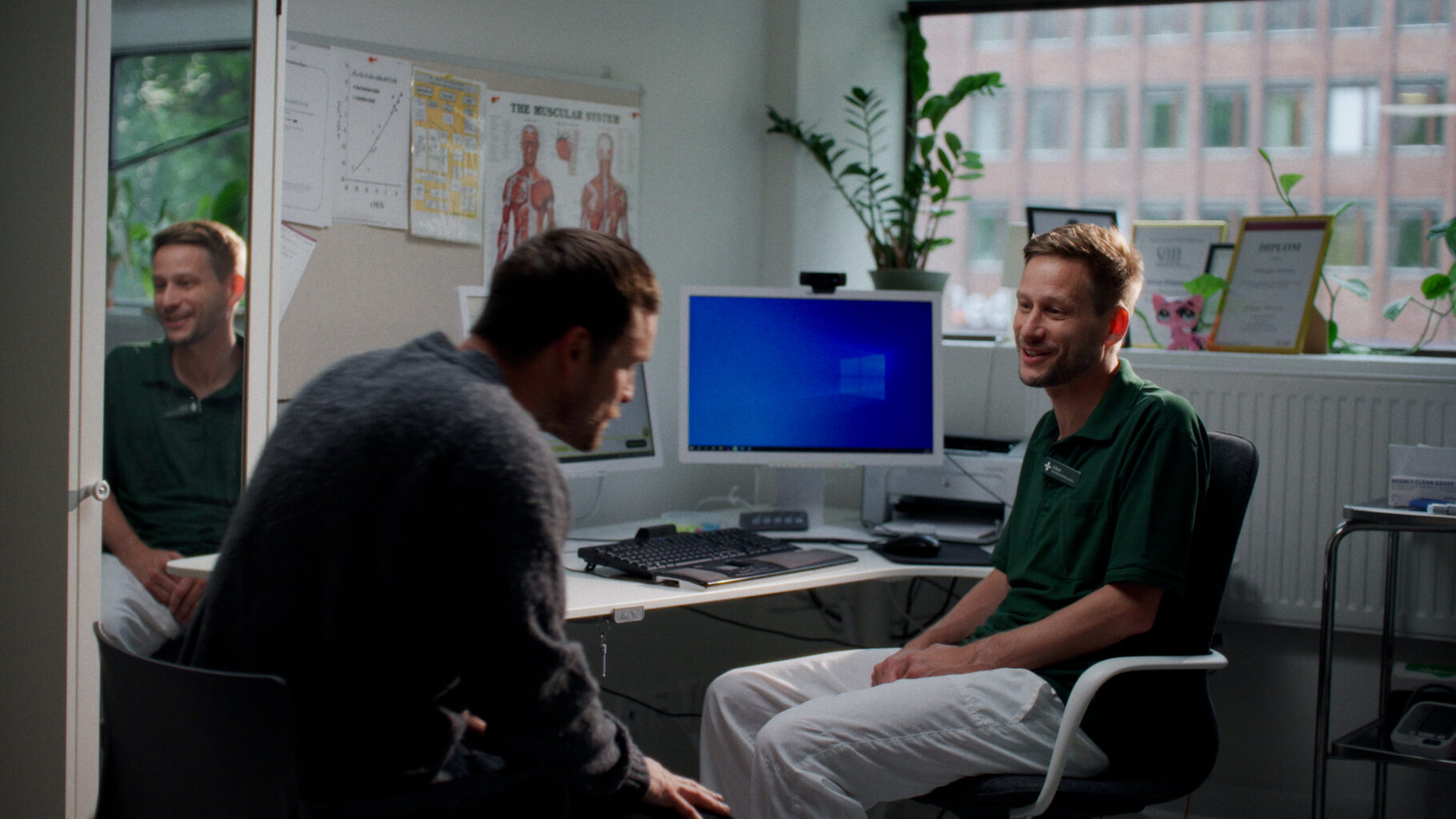
Clinicians spend up to half their working day on administrative tasks. The European startup Tandem Health intends to change that. By using their AI medical assistant, healthcare professionals can free up time for providing care instead of note-taking and documentation.
“Our goal is less stress and better, more equitable healthcare,” says Oliver Åstrand, CTO of Tandem Health.
Oliver Åstrand is an AI researcher that recognized early in the evolution of AI that large language models could enable innovative business solutions. Åstrand founded Tandem Health with his partners, Lukas Saari and Oscar Boldt-Christmas, who were working in McKinsey’s healthcare team.
“We began by calling every doctor, psychologist, nurse, and physiotherapist we knew to understand their challenges and how we could assist,” Oliver Åstrand explains.
An AI medical assistant that relieves the burden
Administrative documentation was consistently cited as the biggest time‑stealer. Oliver adds,
“The problem is massive. To put it into perspective, three percent of global GDP is spent on healthcare administration. Clinicians spend up to half their time on admin.”
This also goes beyond just documentation, as clinicians also spend time on scheduling, coding, referrals, and much more. Additionally, there is also the clinical dimension where clinicians can benefit from support to provide higher quality care.
“AI in the LLM era has the potential to revolutionize healthcare delivery and workflows. We see our current product as just the beginning on a larger journey to enable clinicians to focus fully on delivering higher quality care.”
Scaling to 1000+ care organizations
Tandem has quickly expanded from the Nordics across Europe, now having local operations also in the UK, Germany, France and Spain. In total, over 1000 care organizations now use Tandem every day. This includes large care providers such as Capio Ramsay Santé in Sweden, and an ongoing rollout to 200,000+ clinicians in the UK’s National Health Service through a partnership with Accurx.
“The doctors who use it are thrilled. We see how our assistant enhances the lives of healthcare professionals. One doctor told me, ‘My life is divided into before and after Tandem.’ Another said, ‘Now I have time to eat dinner with my kids.’”
The AI medical assistant takes notes
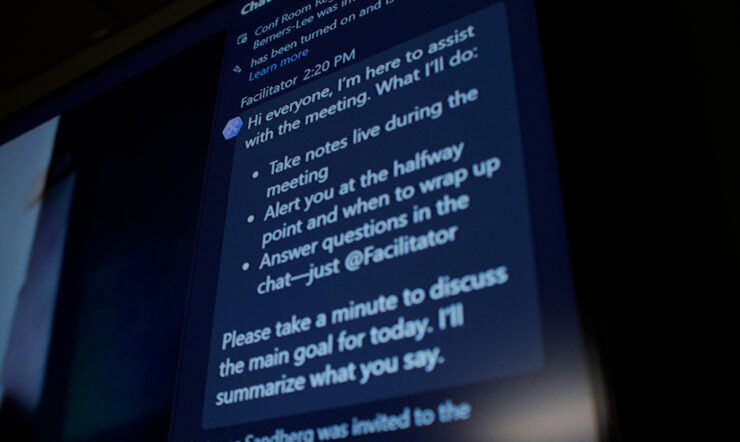
The assistant ‘attends’ the entire patient consultation. It acts like a secretary, listening to the meeting and transcribing the conversation in real time. Notes are generated using the clinic’s pre-defined templates.
“It’s very easy to use, and during the onboarding process, we customize the assistant for each healthcare provider,” says Oliver Åstrand.
He stresses that it’s not an autonomous system. Before anything is entered into a medical record, the responsible practitioner must review and approve it.
“The AI assistant doesn’t replace the clinician’s role; it enhances it. Our tool allows staff to be more present and communicative with the patient while saving time.”

Major time savings
Clinicians using Tandem Health report saving up to two hours per day, with half of Tandem users stating they save more than 60% of their administrative time.
“Those two hours make a huge difference in well‑being and reduced stress for the staff.”
Simple integration with existing electronic health records and note templates, along with intuitive design, are key success factors.
“We see that even older, less tech‑savvy individuals quickly learn and benefit from the assistant. We also make a point of continuously gathering feedback from healthcare professionals to improve the tool further.”
Focus on safety
Patient safety is paramount. Former surgeon and regulatory expert Dr. Yan Peng Zhao is Tandem’s Medical Device Regulation (MDR) Compliance Lead, working to strengthen data handling and legal compliance.
“The regulations exist to ensure safe products. It’s about minimizing risk so that what we build is truly safe to use in healthcare.”
Tandem is currently undergoing certification processes for future medical modules that they are developing.
“We’re already building with the same processes as if we were fully certified.”
To guard against potential AI errors, built‑in safeguards ensure practitioners verify notes before submitting them.
“We have risk control measures across the entire interface. For example, if someone tries to approve a note too quickly, they get a warning that they must review the text first. It is not intended and therefore intentionally difficult to submit the notes into the record without having read them.”
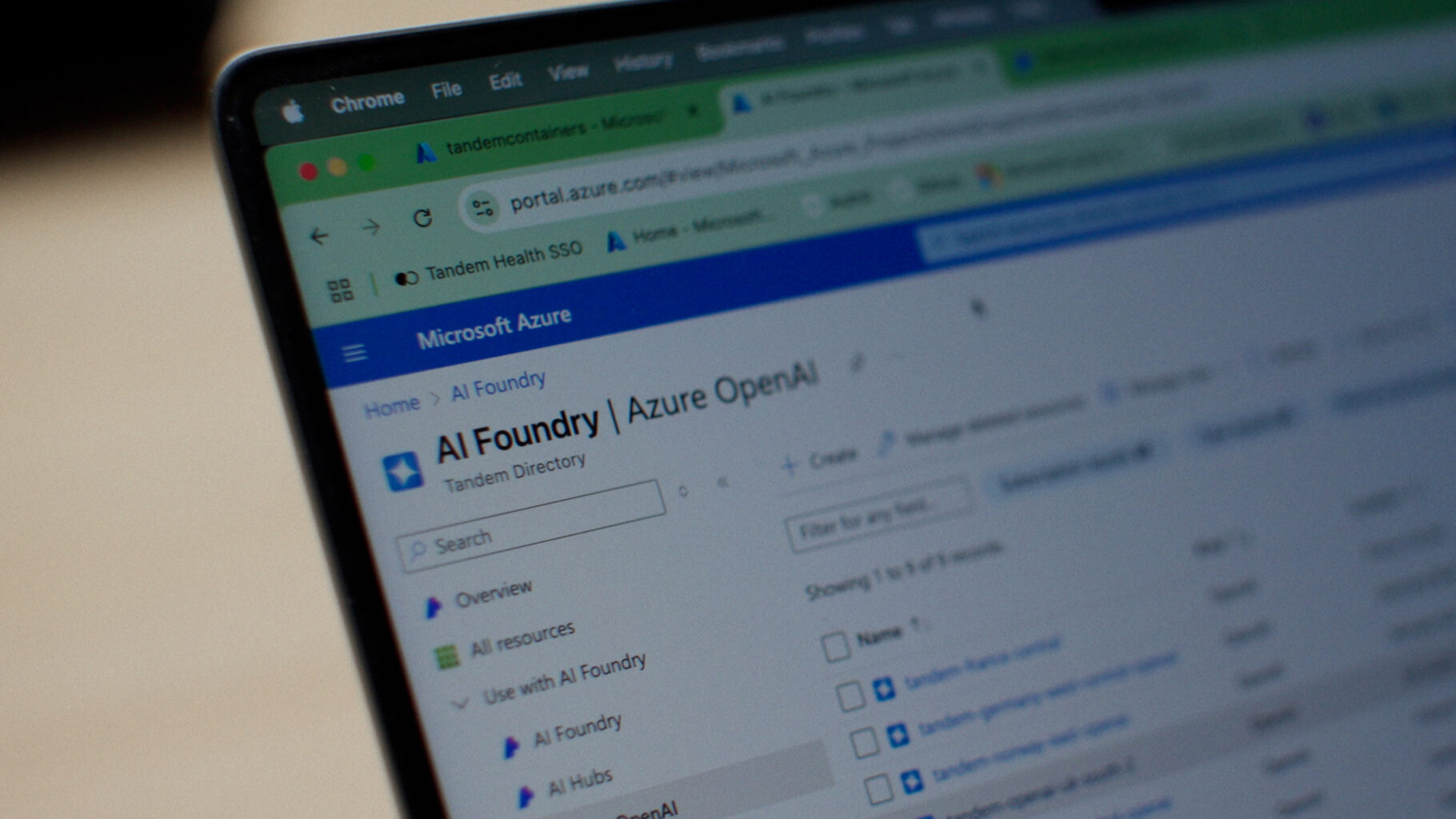
Microsoft as a trusted partner
Microsoft provides cloud infrastructure, AI models, and secure data handling.
“It’s hugely reassuring for us to be able to say that we run the assistant in a secure Microsoft environment,” says Åstrand.
“We have security guarantees about how and where the data is handled. We don’t store any audio data. The audio is deleted immediately after the assistant has transcribed it.”
From administration to decision support
Tandem’s vision extends beyond documentation; it’s building an AI-native clinic operating system to also support clinical coding, clinical decision support and care coordination.
“Our ambition is to give more people access to the right care at the right time. AI can help level the playing field—I’m completely convinced of that,” Åstrand states.