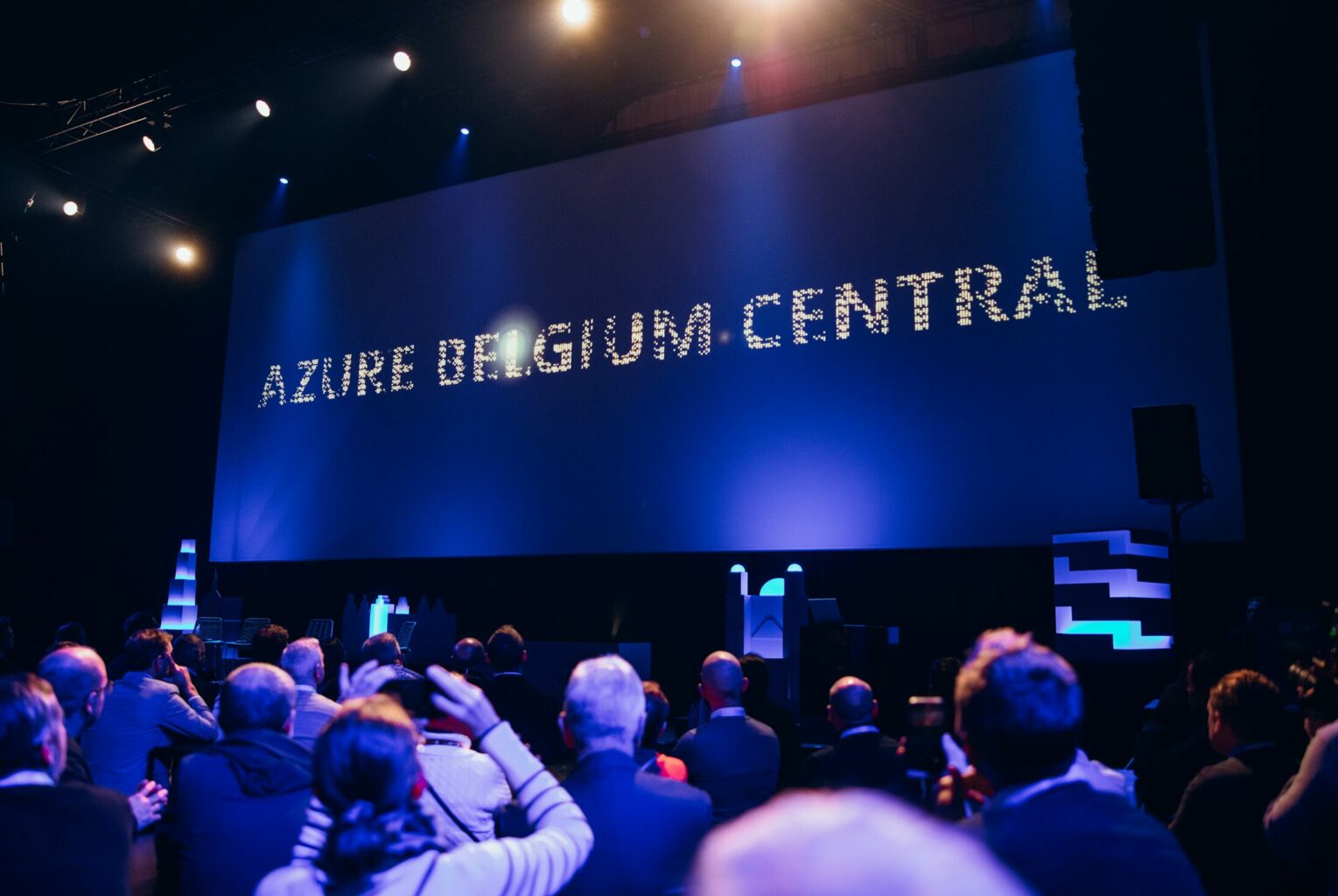
Brussels, November 18, 2025 – Today, Microsoft officially opened Azure Belgium Central, its Belgian data center region, making their cloud services locally available in Belgium. According to the International Data Corporation (IDC), cloud services used by Microsoft, its partners, and customers could generate approximately €59 billion in new revenues above the 2025 level, significantly boosting the Belgian ecosystem over the next four years. Businesses, governments, and institutions across all industries and of all sizes can now rely on fast, more secure, and scalable cloud services with local data storage in Belgium.
The launch marks an important milestone in the Digital AmBEtion plan, Microsoft’s multi-year investment program aimed at accelerating digital transformation in Belgium and strengthening the country’s competitiveness. Belgium’s thriving ecosystem – from international organizations and innovative SMEs and scale-ups in biotech and fintech, to global companies in healthcare, manufacturing, and logistics – can now operate with greater digital sovereignty, resilience, and cost efficiency.
Empowering Belgium’s digital transformation
Microsoft has been a trusted partner to Belgium for almost 40 years, and works closely with Belgian’s leading companies, public sector, start-ups, academic partners, non-profit organizations, and NGOs. By opening the local cloud region, people and organizations across Belgium benefit from faster access to their digital tools and data and the reassurance that their data stays safely stored. This infrastructure provides the flexibility to grow and innovate, making it easier to bring new ideas to life.
“The launch of the Belgian cloud region is a historic moment for Microsoft and for Belgium,” said Marijke Schroos, General Manager of Microsoft Belux. “With this infrastructure, we are making our cloud services locally available so that Belgian companies, governments, and institutions can innovate with more speed, security, and confidence. This is not just an investment in technology, but also in the future of Belgium’s digital economy.”
According to the International Data Corporation (IDC), over the next four years, Microsoft, its partners, and customers using cloud services could generate €59 billion in new revenues above the 2025 level.
In addition, this growth is projected to add 85,000 jobs to the economy over the same period. These include both direct employment within Microsoft, its partners, and customers, as well as indirect jobs created in other organizations as a result of the broader economic impact.
Belgium’s role in the digital future
Today’s launch in Brussels brought together political and economic leaders to celebrate Belgium’s growing role as a digital innovation hub, including Vanessa Matz, Minister of Digitalization and Proximus’ CEO Stijn Bijnens.
“With the arrival of this cloud region, Belgium strengthens its role as a key player in Europe’s digital transformation. By keeping data secure and close to home, we not only increase our productivity and economic strength, but also position our country as a frontrunner in digital innovation. This investment makes Belgium an essential link in Europe’s digital sovereignty. It is an opportunity our country must seize with both hands,” said Bart De Wever, Prime Minister of Belgium.
“At Proximus, we are proud to strengthen our partnership with Microsoft through Azure Belgium Central,” said Stijn Bijnens, CEO of Proximus Group. “This new cloud region is an important milestone for Belgium’s digital future, enabling us to offer secure, locally hosted solutions tailored to the needs of our customers and the market. By combining Microsoft’s global expertise with our leadership in connectivity and digital services, we help businesses and public institutions accelerate their transformation, innovate with confidence, and grow sustainably. Together, we are building a stronger, smarter, and more competitive Belgium.”
Sustainability meets innovation
With this launch, Microsoft continues to expand its cloud infrastructure, creating a growing network of Microsoft datacenter regions available across Europe, with ongoing dedication to sustainability. Microsoft is committed to covering all energy consumption of its datacenter campuses with 100% carbon-free electricity purchases. This local investment is part of Microsoft’s global ambition to become carbon negative, water positive and zero waste by 2030. The rapid growth in demand for AI innovation to fuel the next frontiers of discovery has provided Microsoft with an opportunity to redesign infrastructure systems, from datacenters to servers to silicon, with efficiency and sustainability at the forefront.
Digital AmBEtion: beyond infrastructure
Microsoft’s commitment in the Digital AMBEtion plan, extends far beyond physical infrastructure. AI skills are essential to unlock the full potential of Belgium’s digital transformation. That’s why Microsoft recently partnered with the Flemish government in a large-scale project to introduce Microsoft Copilot to 10,000 civil servants, making this one of the largest public Copilot projects in Europe. Microsoft also launched a partnership with Belgian Defence, through a training program aimed at strengthening AI skills for thousands of Defence employees. These initiatives highlight Belgium and Microsoft’s ambition to modernize public services with AI.
Microsoft’s AI National Skilling Initiative (AINSI) is an ambitious training program that aims to equip 600,000 people in Belgium with essential AI skills by 2028. To achieve this, Microsoft works together with local partners such as BeCode and Howest to develop training programs that include everyone.
About Microsoft
Microsoft (Nasdaq: “MSFT” | @microsoft) creates platforms and tools powered by AI to deliver innovative solutions that meet the evolving needs of our customers. The technology company is committed to making AI widely available – and doing so responsibly – with the mission to empower every person and every organization on the planet to achieve more.
In Belgium and Luxembourg, Microsoft employs more than 500 people and works with a strong network of over 6,000 partners. Together, Microsoft Belux helps businesses of all sizes, public institutions, and NGOs find solutions. Microsoft Belux aims to guide its customers on the journey to a digital society, helping them overcome challenges and seize opportunities along the way.