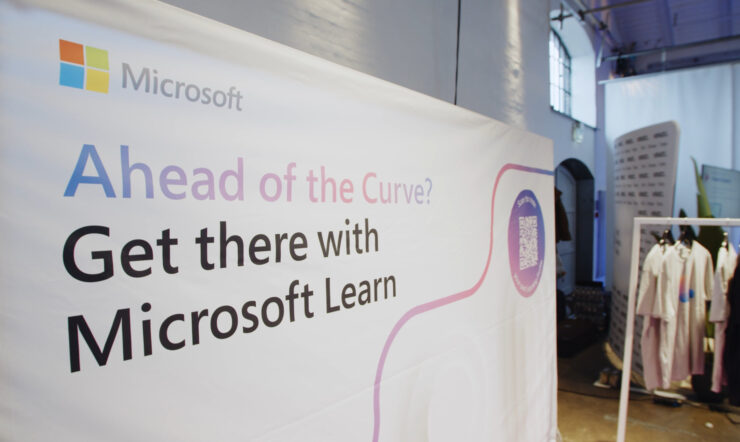


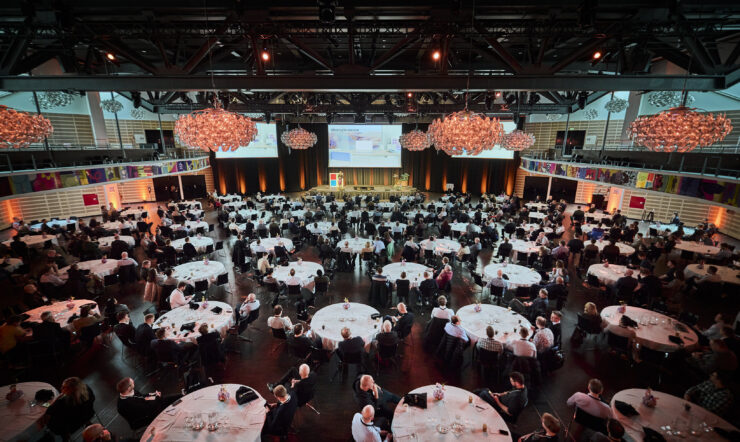
Shedding light on the best of what’s next in technology at the first-ever Microsoft Ignite Denmark
At Microsoft Ignite Denmark local tech leaders and Microsoft experts were invited to explore the latest innovations in AI. From […]


Dardan Dashaj
Go To Market Lead - Azure
“We have been testing products for more than 30 years and over time we established many different ways of relating, linking, and storing data. But the pace of innovation and digitization and the increase in test data complexity combined with our need to get our products faster on the market meant that a new data platform was needed to better structure and access data“, Christian Fenselau, Chief Specialist, Test & Verification at Vestas says.
The acronym TVDP refers to the Test & Verification Data Platform, a tailored version of the Tricloud IoT platform. Built entirely on Microsoft Azure technologies, the Tricloud IoT platform leverages Azure IoT Suite and Azure Data Explorer (a time series database) to gather and disseminate data from Vestas Test facilities, enabling advanced analytics and artificial intelligence. Moreover, the TVDP platform includes cutting-edge metadata management capabilities, allowing for a thorough and comprehensive overview of all the data.
“We quickly found out that test data is very different from business or operational data. Just the sheer amount makes it different. We have input from thousands of sensors sending trillions of signals. And unless you have analytical tools, data is simply too hard to comprehend”, James Smith, Senior Technical Specialist, Test and Verification at Vestas says. Furthermore, the contextualization of each test is crucial: “It’s important that we know exactly where each test and sensor come from so that we are able to compare data between tests – it was very important for us to embed contextualization into the platform to add metadata about the tests”, James Smith adds.
Because huge volumes of data flow in at high velocity from various sources, the ability to identify and respond to meaningful events is key.
– James Smith, Senior Technical Specialist, Test and Verification at Vestas.
New designs for future products make the data requirements increase. For Vestas it’s not good enough to have access to test data via intermediary systems and people: “Our engineers need to be able to react to events from test data in near real-time. Before our lift to the cloud, we relied on people a lot. And we have excellent people, but it was a very time-consuming process. Data would be coming in; data files would be processed in Excel or you would be e-mailing images back and forth. With the information in many different places this was not a viable solution”, James Smith says.
One of the major advantages Vestas has gained from the TVDP program is the construction of a common data platform across departments. Christian Fenselau explains: “No matter if you’re working on the gearbox or the blades, test data is ending up in the same place. That means the value of the test data is benefitting all departments. That’s cost-efficient because the same cloud-enabled analytical tools are used. Another great advantage is that the cloud-based platform can digest test data from external partners as well, so now it’s irrelevant if the data stem from internal Vestas sources or external third-party sources – Vestas is using them in the same way – mainstreaming the workflow.
The value of TVDP and Microsoft ADX to Vestas customers and ultimately the energy transition can be summed up.
“When you are testing and creating massive amounts of data, you want to leverage it all – we need to get out as much information as possible to mitigate the risk in our new designs. It is crucial for our customers to create business case certainty for them.”
– Christian Fenselau, Chief Specialist, Test & Verification at Vestas.
“Furthermore, our products are developing; they are becoming bigger and lighter. This means that we need to ensure that product risks are minimized and that a more structured and automated approach to data is necessary to accelerate the understanding of risks. This program is a big step forward in making more advanced model validation which will ultimately ensure smoother time to market”, Christian Fenselau continues.
After a technology switch, Vestas chose to go with Microsoft ADX. “It was capable of scaling to the demand we require and at the same time providing the needed capability much better than our prior system. In short, this solution enables us to scale and store. And that’s what we need”, James Smith says.
“Tricloud entered the TVDP program after phase one. We switched to ADX and the solution started to make much more sense. It’s been a real sea change working with Tricloud and they have been key to getting this project off the ground”, James Smith says.
– James Smith, Senior Technical Specialist, Test and Verification at Vestas.
Vestas has been rolling out the TVDP to the different test benches since 2022, but not all benches have been on-boarded yet. “We know we can do this, and we know we can use it, but we still need to roll it out full scale. We have a lot of different people, technologies, and machines that need to work together – so the full implementation is going to take some time. That’s why we have developed training sessions, and set up communities to get people to learn and adapt to the changes. Luckily, we’re a forward-thinking company and people are open to change, and this program is fitting nicely with our overall digital transformation”, James Smith concludes.
At Microsoft Ignite Denmark local tech leaders and Microsoft experts were invited to explore the latest innovations in AI. From […]

Maria Galvez
CMO Lead - Microsoft Denmark & Iceland
I Morsø Kommune har de med Azure, Microsoft 365 og den samlede sikkerhedspakke skabt en digital infrastruktur, der giver et […]
Dardan Dashaj
Go To Market Lead - Azure
Den danske fintech-virksomhed November First har skabt et digitalt betalingsinstitut, hvor virksomheder enkelt og sikkert kan håndtere fakturaer og betale […]
Dardan Dashaj
Go To Market Lead - Azure